Welcome to blog about management, marketnig and random (not)interesting stuff.

As you might guess from blog title, I will post some basic management and marketing tools aswell as info about managerial skills needed to be a sucessful manager. Hope you enjoy reading it as much as I enjoy writing it. Yours sincerely, BojanCo

Saturday, July 16, 2011

P.E.S.T Analysis

Hello again people. Today we are going to have a look at PEST analysis. No, its not a rat and critter analysis, it is actually one of the most important strategic tools in management and marketing.

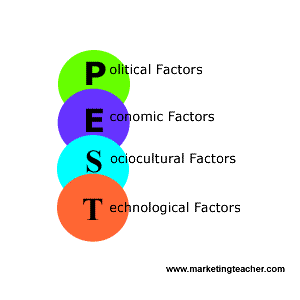
So, what PEST means? It is acronym from words POLITICAL, ECONOMIC, SOCIAL and TECHNOLOGICAL. When first letters of these words are combined, we get its name. In a word, PEST analysis is an analysis of political, economic, social and technological factors in a specific region or country. This analysis is a foundation for all means of strategic planning and also for some other analysis, for ex. SWOT analysis.

POLITICAL

- Current political situation (level of political risk)
- Political factors that can have a effect on our business.
- Is political climate suitable for developing new competitors?
 etc.

ECONOMIC

- General economic situation in a region
- Wealth of the nation
- Buying power in a region
- Degree of market and econ. growth
etc.

SOCIAL

- Population
- Level od education in a region
- Social attitudes
etc.

TECHNOLOGICAL

- Infrastructure
- Level of technological sophistication in a region
- Potential for technological growth
etc.


There are also two more analysis in addition to PEST.
These are LEGISLATION and ENVIROMENT analysis but they are not used as often. With these two, the full neme would be PESTLE analysis.

Thats all for now, see you soon.
BojanCo

Saturday, July 9, 2011

S.W.O.T Analysis 101

Hello everyone, today we are going to see one of the most basic management and marketing tool - the SWOT Analysis. Keep in mind that this is only some basic info and that i will publish more detailed info later in the year.

SWOT analysis represents a marketing and strategic tool which is used to examine strenghts and weaknesses of the company in a relation to its chances and risks on the market. It consists of 4 elements: STRENGTH, WEAKNESS, OPPORTUNATY and THREAT. When first letters from these words are combined, we get its name - SWOT.

STRENGTH - this element gives us answer to a question: "what does make our company so successful on a specific market?" Also, some other questions are asked, such as:
- What advantages do we have over our competitors?
- Why our buyers value our company?
- What makes us unique?
- Do we have an original corporate image? and other questions regarding our STRENGHTS as a company.

WEAKNESS - here we need to face the ugly truth about waknesses of our company. Also, some questions must be answered.
- What are we doing wrong and how can we improve it?
- In what business aspects are our competitors better than us?
- What are the drawbacks of our business?
- Do we lack in certain marketing activities? and other questions regarding our WEAKNESSES.

OPPORTUNITY - this element represents opportunaties for growth on a specific market. Some questions are crucial.
- Did we fully cover our primary market and if not, what part we didnt?
- Can we expect some new laws and policies that we can use in our advantage?
- Are there any opportunaties for vertical integration of our company? and other question regarding OPPORTUNAIES on a specific market.


THREAT - this element will point out threats that our company is subjected to on a cpecific market. Here also, we need to take a look at some questions.
- Can we expect new competitors and substitutes in our market?
- Did the laws changed affecting us negatively?
- Is suppliers negotiating power rising?
- Can we expect new economic crisis? and other questions regarding THREATS that our company is subjected to.

When making SWOT analysis it is crucial to be realistic!
Thats it for now, more detailed info about SWOT will come later.
Cheers!

Friday, July 8, 2011

New blog theme and look

As you can see, I changed the look of my blog and also the blog theme. Hope you like it! Cheers!

Fun And Mostly Useless Facts - Part 3

It's trivia time! You know that you will never need them, but they are good to know. :)

- In 1982, in the first operation of its kind, doctors at the University of Utah Medical Center implanted a permanent artificial heart in the chest of retired dentist Dr. Barney Clark, who lived 112 days with the device.

- A murder is committed in the US every 23 minutes, which makes about 22852 murders each year.

- About 100 people choke to death on ballpoint pens each year.

- In 1845, President Andrew Jackson's pet parrot was removed from his funeral for swearing.

- "Billie Jean" by Michael Jackson was the first video to air on MTV by a black artist.

- Americans consume 29 billion, or 58 percent, of the 50 billion aspirin tablets which are taken worldwide each year.

- Gatorade was named for the University of Florida Gators where it was first developed.

- Laser stands for "light amplification by stimulated emission of radiation." Developed 1950s - 1960s.

- There are two credit cards for every person in the United States.

Thats it for now, hope you enjoyed these useless facts. :)

Tuesday, June 21, 2011

Types Of Insurance

Hey people, today im going to write a few words about insurance. 

There are different types of insurance. Some types of insurance are required by law(such as vehicle insurance), while the others are voluntary.

There are certain situations when some institutions demand that you have insurance in order get credit, travel abroad, take car on lease and so on. The most common types of insurance (in no particular order) are:


- Property insurance, (buildings, equipment, houses and possessions),which provides protection against most risks, such as fire, theft or damage caused by weather or flood.

- Car insurance which provides protection against damage to your car resulting from theft or accident

- Insurance against accidents, securing people in case of unexpected events while performing their regular work, or during free time, ensuring the payment of pre-agreed amount of money in the event of disability or death of the insured person.

- Voluntary health insurance that covers medical expenses, or provide payment of all or part of the agreed sum insured if there is a serious illness or surgery.


- Life insurance provides benefits for the  family of the deceased or another designated beneficiary. There are two basic types of life insurance: insurance against death and a mixed insurance (insurance which provides life insurance with savings features).

Annuity insurance, which provides payments in advance of the contracted amount of money continuously, immediately after a single premium payment or after the contract period.

Some insurance policies (eg, insurance against accident, life, health insurance) may be group or individual.


Group insurance is usually offered through employers or organizations (eg, travel agencies, banks). All employees or members eligible for insurance may participate in group policy, regardless of age or physical condition. The premium for group insurance is calculated based on the characteristics of the group as a whole, such as average age and degree of job risk. It is usually cheaper than individual insurance.


If you can not access group insurance, consider buying individual insurance. Unlike group insurance, buying individual insurance is done directly from insurance companies or through agents or intermediaries.


The degree of risk determines whether you qualify for and how much insurance will cost you.


There are many kinds of products for each type of insurance. They offer different levels of protection and price vary considerably. It pays to investigate different insurance offers not only due to the cost of insurance, but also because of the level and scope of insurance coverage that you need.

Tuesday, June 14, 2011

15 years of .mp3 format

Yup, 15 years have passed! Cool, huh?
Patented in 1987, but it was named ".mp3" in 1995.

.mp3 was developed in institute "Fraunhofer" in Erlangen, Germany. There, the scientists were looking for best compression alogorithm, and the song used in experiments was Suzanne Vega - Tom's diner. :)

The idea was to separate and compress only parts of the song that can be registered by human ear. (Because every song has a lot of frequencies that can not be registered) Using this metod, thay "tricked" the ear by only playing registerable parts thus reducing the size to only 10% of the original size.

The name was given in a poll!

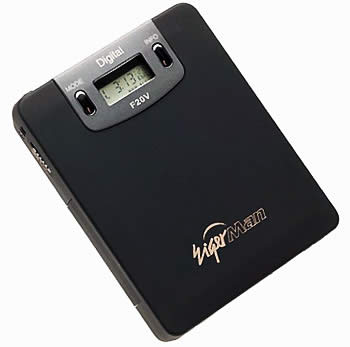
First .mp3 player was made in 1994, and when it was made, all major electronics manufacturers belived that it was too complicated and that will never catch on... Oh my, what a mistake...

In 1995, poll was taken among employees in order to name this extension... The original name was (and still is) ISO MPEG Audio layer 3, but it was too long and complex, so they came up with name ".mp3".

So for listentng to our favorite music in mp3, we need to thank "zee Germans"!


Monday, June 6, 2011

Fun and mostly useless facts - part 2

Its trivia time! This time mainly about science and super bowl!

- A lump of pure gold the size of a matchbox can be flattened into a sheet the size of a tennis court.

- Absolutely pure gold is so soft that it can be molded with the hands.

- Ten per cent of the salt mined in the world each year is used to de-ice the roads in America.

- The Chinese were using aluminum to make things as early as 300 AD Western civilization didn't rediscover aluminum until 1827.

- The only rock that floats in water is pumice.

- As of 2006, the cost of a 30-second commercial on average is $2.5 million. The first famous Super Bowl commercial was a 1974 ad for Noxzema featuring Super Bowl legend Joe Namath.

- No network footage exists of Super Bowl I. It was taped over, supposedly for a soap opera.

- Super Bowl Sunday is the second-largest U.S. food consumption day, following Thanksgiving.

Twitter Delicious Facebook Digg Stumbleupon Favorites More

 
Powered by Blogger